Project HUMTRACK
Uncovering the Hidden Lives of Hummingbirds
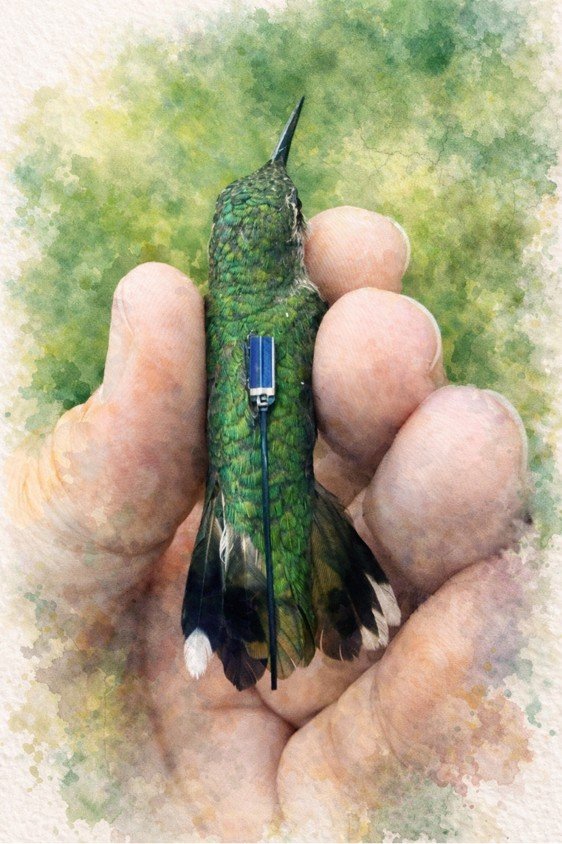
Black-chinned hummingbird with a BlūMorpho transmitter
The Mystery: Life Beyond the Leg Band While we know a lot about hummingbirds, there is still a massive gap in our understanding of their daily lives and epic journeys. For over 20 years, our primary tool has been banding—placing tiny, numbered rings on their legs. This has taught us that hummingbirds are incredibly loyal to their homes, with about 30% returning to the exact same spots year after year.
But banding has a major limitation: it only tells us where a bird is at the exact moment we catch it. The second that bird flies away, it enters a "No Man's Land". Historically, we've had to guess how much space they need or how they handle migration based mostly on opportunistic, direct observations. To truly understand them, we need to stop guessing and start tracking.
Our Mission: Decoding the Hummingbird's Journey
Project HUMTRACK is changing the game. Using cutting edge, miniaturized tracking technology, we hope to finally map out their everyday habitat needs during the summer and winter, the exact timing and distance of their migrations, and the crucial rest stops they rely on along their journey between summer and winter grounds.
To solve these mysteries, our research is focused on four main goals:
1. The Great Migration
By placing tiny, solar-powered transmitter on hummingbirds before they migrate, we can watch their journeys unfold in near real-time.
When to Leave: What specific weather or environmental clues tell them it’s time to pack up and fly south?
The Route: Does the exact spot where a hummingbird breeds determine the path it takes, how far it flies, and how long the journey takes?
2025 hummingbirds on the move!
Black-chinned female migrating through Ogden, UT.
2. Stopovers and Habitats
Just like a human on a cross-country road trip, hummingbirds need safe places to rest and refuel.
Finding the Stopovers: Where are these critical rest areas located, and how much space do the birds need while they are there?
The Backyard Connection: What types of landscapes do they prefer? Are our own backyards and gardens enough or do they need natural landscapes with right flowers, insects, and shelter?
3. Raising a Family
To protect hummingbirds, we need to know exactly what they need during their most vulnerable time: raising young.
Nesting Space: How much territory does a hummingbird use around their nest to successfully incubate eggs? How does this change when the eggs hatch and mom needs to feed hungry babies?
Growing Up: Once the chicks leave the nest, how much territory do they need to learn to fly and find food before their first big migration?
Finding Food: By tracking their exact daily flight paths, we can see precisely which hidden habitats are absolutely essential for hummingbirds to survive and thrive.
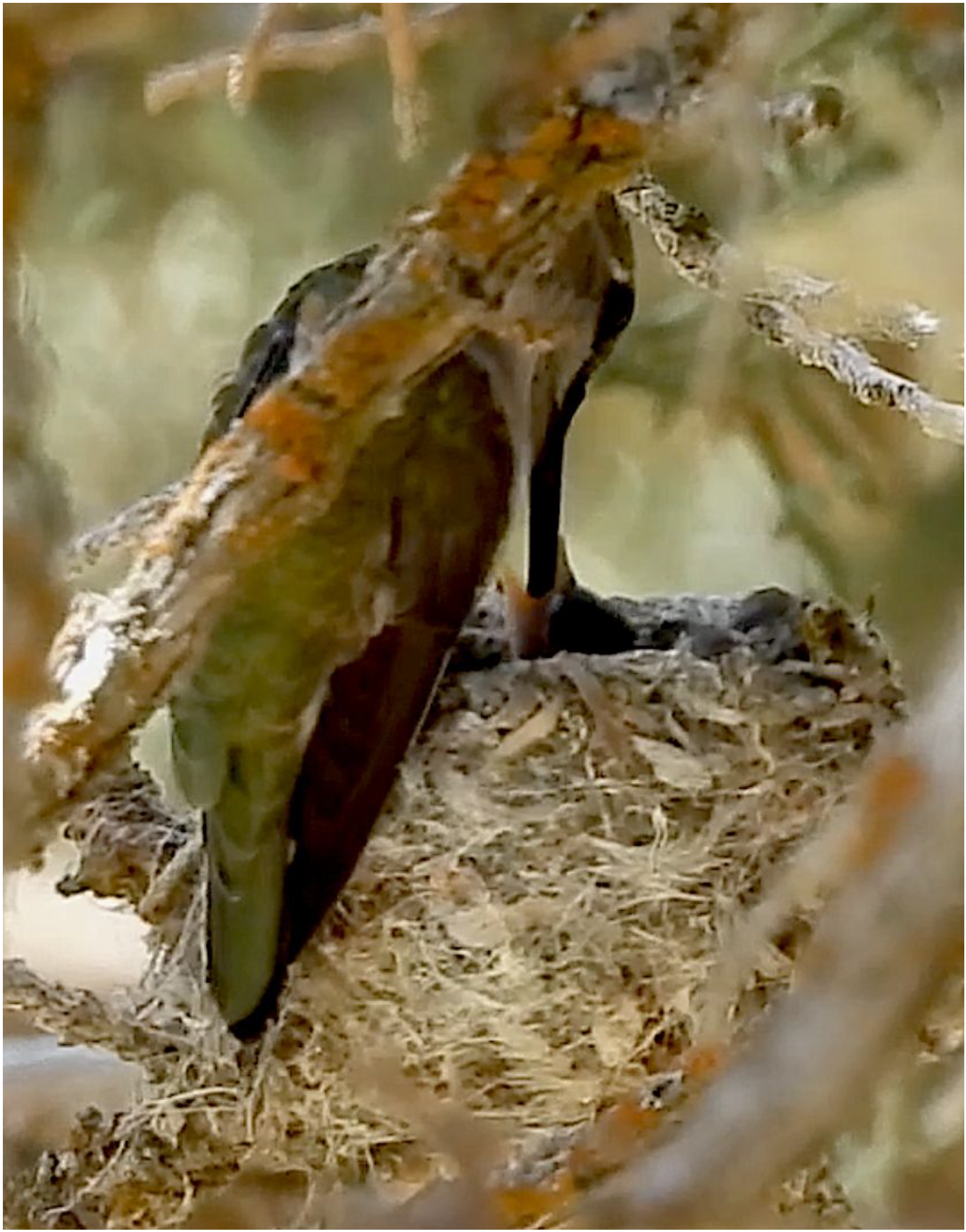
Black-chinned female with a transmitter feeding young. (c) 2025 Kyle Shepard

4. Family Ties and Genetics
A new initiative for 2026 is that we are using feathers to look at their DNA.
Unique Populations: Are there genetically unique "families" or groups of hummingbirds scattered across North America?
Connecting the Dots: Can a simple feather reliably tell us where a bird spends its winters and summers? Does a bird's breeding ground dictate its winter home?
Support the Journey: How You Can Help
Driven by Passion, Funded by Community Groundbreaking wildlife research takes a village, and Project HUMTRACK is no exception. To date, this entire initiative has been made possible exclusively through private funds and countless donated volunteer hours. Tracking these tiny, fast-moving birds requires advanced technology and immense dedication, and we rely on the generosity of people who care about their conservation.
We extend our deepest gratitude to the organizations that have provided crucial financial backing to get this project off the ground:
A Heartfelt Thanks to Our Team and Partners This project simply would not exist without the hard work and expertise of our collaborators:
Fred Bassett for providing essential thoughts and encouragement on our initial project design.
Kyle Shepard for volunteering countless hours of fieldwork, assisting with training, coordinate the necessary permissions, and sharing his deep insight into hummingbird behavior.
Emma Rhodes for her invaluable support with our study design and publications.
Kent and Francine Rudeen for graciously providing the location for this research, along with housing, an amazing experience, heavy labor, and fantastic support every step of the way.
Many-Many Volunteers, too many people to list have volunteered innumerable hours to Project HumTrack in 2025 and the preceding decades. Your support has been immeasurable. Thank You!
Join the Flock! We are just scratching the surface of what these incredible birds do when they leave our backyard feeders. If you are inspired by this work and want to help us continue bridging the gap in hummingbird ecology, please consider supporting our ongoing research with a donation.
Subscribe to our NEWS to learn about our upcoming fieldwork, and updates on our findings!